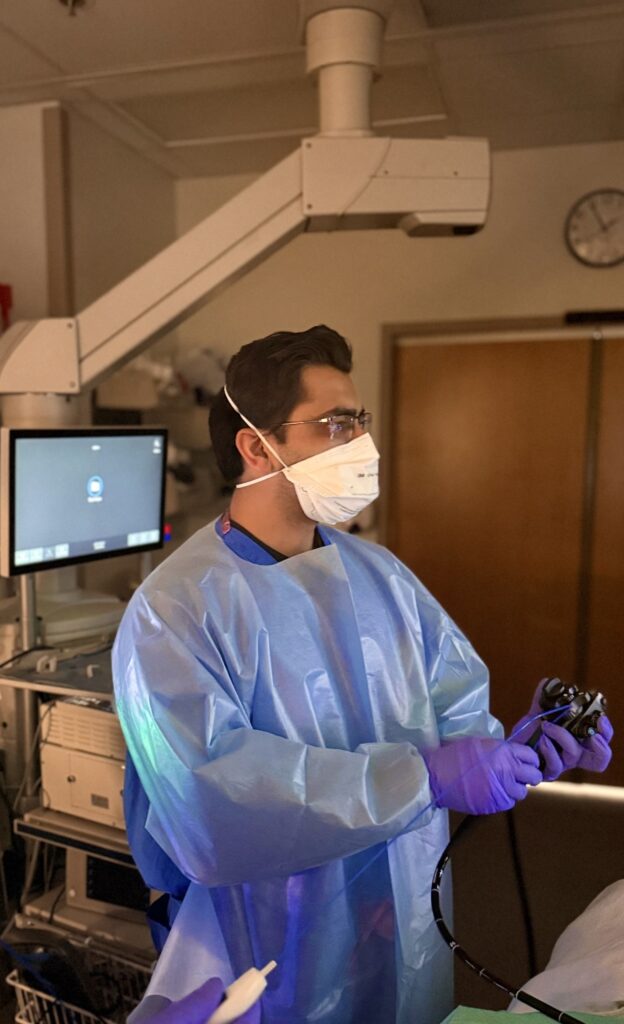
Third space endoscopy is a type of minimally invasive procedure that lets gastroenterologists treat certain digestive problems from inside the body, without any cuts or incisions on the outside.
The gastroenterologist will use a flexible tube called an endoscope, which is passed through the mouth or anus to address issues within the esophagus, stomach, small intestine or colon.
“Third space” refers to a natural layer in the wall of the digestive tract – the submucosal space – that can be gently opened to reach the muscle layer where many problems occur. The benefits of third space endoscopy include shorter recovery time and less pain compared to surgery, no external incisions and low risk of complications.
Common Third-Space Procedures
| Procedure Name | What It Treats | How It Works |
| Peroral Endoscopic Myotomy (E-POEM) | – Achalasia: A condition where the lower esophageal muscle (the valve between the esophagus and stomach) doesn’t relax properly, making swallowing difficult – Other swallowing disorders | The doctor gently opens a small space inside the esophageal wall and cuts a tight muscle to help food pass more easily into the stomach. |
| Gastric POEM (G-POEM) | – Gastroparesis: Conditions that slow or block the emptying of food from the stomach into the small intestine – Pylorospasm | A similar approach is used in the stomach to loosen the pylorus (the stomach’s outlet valve) and improve emptying. |
| Z-POEM | – Zenker’s diverticulum: A pouch that can form in the upper esophagus, causing difficulty swallowing, choking or regurgitation of food | The doctor divides the muscle wall between the esophagus and the pouch so food can flow normally again. |
| Submucosal Tunneling Endoscopic Resection (STER) | – Deep, benign growths (like small tumors): Non-cancerous growths in the digestive tract | The doctor creates a small tunnel to reach and remove the growth while keeping the outer lining of the digestive tract intact. |
| Endoscopic Submucosal Dissection (ESD) | – Mucosal premalignant growths: Early or precancerous growths in the digestive tract | This technique allows the doctor to remove the entire lesion in one piece, making it easier to study the tissue under a microscope. |
To make an appointment with a WashU Medicine gastroenterologist, please call 314-747-2066 or visit our website.
