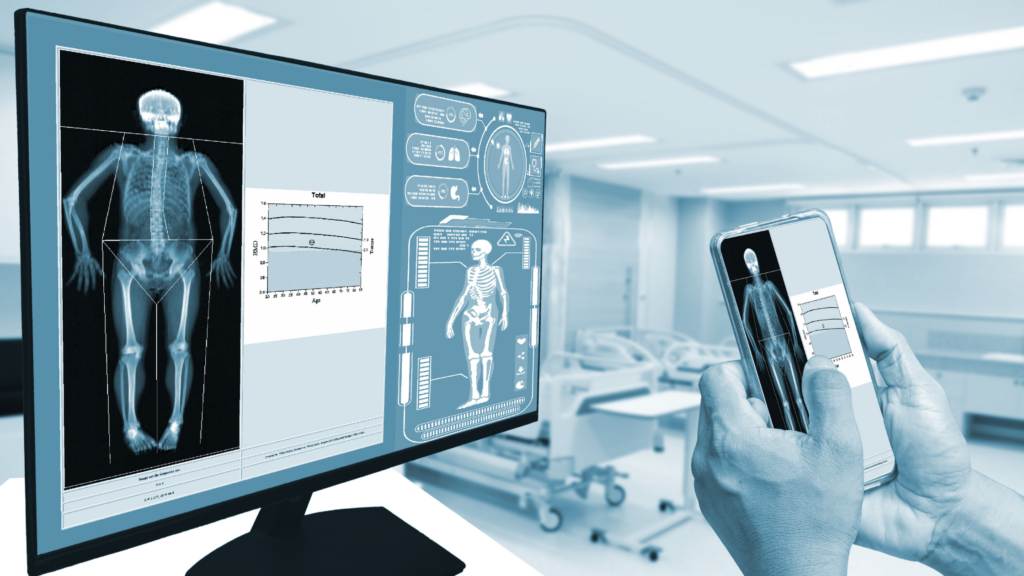
A DXA (DEXA) scan is a quick, painless, low-radiation test that measures bone mineral density. DXA stands for dual-energy x-ray absorptiometry and is considered the standard test for measuring bone density and diagnosing osteoporosis. The scan most commonly measures bone density at the hip and spine. It usually takes about 10–20 minutes, does not require an injection and involves very little radiation.
What do DXA (DEXA) scans help with?
DXA scans help us understand the strength of a person’s bones and their risk of breaking a bone or having a fracture.
They can help us:
- Diagnose osteoporosis or low bone density
- Estimate a person’s future fracture risk
- Determine whether osteoporosis treatment may be appropriate
- Monitor bone density over time and assess response to treatment
Bone density is only one part of fracture risk. We also consider factors such as age, previous fractures, family history, medications, medical conditions and fall risk when evaluating a person’s overall bone health.
What is trabecular bone score (TBS)?
At WashU Medicine, we can also obtain a trabecular bone score (TBS) from the images collected during a standard DXA scan. TBS provides additional information about the internal structure, or microarchitecture, of the bone and can help us better understand fracture risk. It can be obtained from the same images used for a DXA scan of the spine. It does not require another scan, additional radiation or additional time for the patient.
Two people can have similar bone-density measurements but may not necessarily have the same bone quality or fracture risk. TBS can therefore give us another piece of information when assessing skeletal health. It can also be incorporated into fracture-risk assessment tools to help refine an individual’s estimated risk of having a fracture.
TBS may be particularly helpful when someone’s bone density does not tell the whole story, such as in cases where patients have diabetes or other medical conditions that can affect bone quality. TBS is available as part of WashU Medicine’s advanced DXA capabilities, allowing us to provide a more comprehensive assessment of bone health and fracture risk when appropriate.
Who should get a DXA (DEXA) scan?
For routine osteoporosis screening, all women age 65 and older should be screened.
DXA testing should also be considered in:
- Postmenopausal women younger than 65 who are at increased risk for osteoporosis or fracture. Risk factors can include low body weight, smoking, a parent who had a hip fracture, previous fractures and certain medications or medical conditions.
- Men age 70 and older. Many bone-health organizations recommend bone-density testing beginning at age 70, although recommendations vary among organizations.
- Adults who have had a fragility fracture, meaning a broken bone resulting from relatively minor trauma, such as a fall from standing height.
- People taking medications that can weaken bones, particularly long-term corticosteroids such as prednisone. Other examples include certain cancer treatments and some anti-seizure medications.
- People with medical conditions associated with bone loss, such as hyperthyroidism, rheumatoid arthritis, malabsorption disorders and certain forms of chronic kidney disease.
- People being considered for osteoporosis medication or already receiving treatment, when bone-density measurements will help guide their care.
An important message is that DXA isn’t just a test for older women. Men develop osteoporosis as well, and younger people may need testing when they have significant risk factors.
How often should someone get a DXA (DEXA) scan?
There isn’t one schedule that’s right for everyone. How often a DXA should be repeated depends on a person’s age, initial bone density, fracture risk, medical conditions and whether they are receiving osteoporosis treatment.
For many patients, repeating a DXA approximately every two years is reasonable, but some people may need testing sooner and others can safely wait longer. A DXA should be repeated when the result is likely to affect a patient’s medical care, not simply because a certain amount of time has passed.
What can patients do with information from their DXA (DEXA) scan?
The goal is to use DXA information to prevent fractures. A DXA result, together with information such as TBS and a patient’s other risk factors, can help patients and their healthcare providers decide whether additional evaluation or treatment is needed.
Depending on the results and the patient’s overall fracture risk, recommendations may include:
- Making sure calcium and vitamin D intake are adequate
- Increasing weight-bearing and resistance exercise
- Working on balance and fall prevention
- Avoiding smoking and excessive alcohol use
- Looking for medical conditions that may be contributing to bone loss
- Considering medication when fracture risk is high enough to warrant treatment
For someone already receiving osteoporosis treatment, follow-up DXA scans can also help determine whether bone density is stable or improving.
What else should patients know?
Osteoporosis is often called a “silent disease” because people usually cannot feel their bones becoming weaker. For many people, the first sign of osteoporosis is a fracture, which is why screening is important. A DXA scan gives us an opportunity to identify people at increased fracture risk before a fracture happens and take steps to protect their bone health.
By combining DXA with tools such as TBS and fracture risk assessments, along with a person’s medical history and other risk factors, we can develop a more complete picture of skeletal health and fracture risk.
Schedule a DXA scan with WashU Medicine. To schedule your self-pay DXA-based body composition analysis, please call 314-454-7775.